

How to Know When Stress Has Turned Into Something More Serious
Stress is part of life.
Most people feel stressed at times, and sometimes stress is even useful. It can help you focus, respond quickly, and get through demanding seasons. But stress is not supposed to run your whole life. When it stops feeling temporary and starts affecting your sleep, your body, your mood, your relationships, and your ability to function, it may be turning into something more serious. The NHS notes that stress is common, but support is important if stress is affecting your life or becoming hard to cope with. (nhs.uk)
That is often where people get stuck.
They keep telling themselves:
“I’m just busy.”
“This is just a hard season.”
“Once things calm down, I’ll feel better.”
“I should be able to handle this.”
Sometimes that is true. Sometimes it is not.
If you have been wondering whether your stress is becoming something more than ordinary pressure, there are some signs worth paying attention to.

Stress may lead to more severe emotional or mental health challenges.
Stress becomes more serious when it stops easing up
One of the biggest differences between normal stress and something more serious is that normal stress tends to rise and fall.
It usually has a clearer cause, and it often eases when the situation changes. NIMH explains that stress is generally a response to an external cause, while anxiety tends to involve a more persistent sense of dread that does not go away and can interfere with daily life. (National Institute of Mental Health)
If your stress is becoming something more serious, you may notice that:
you feel on edge most days
your mind rarely feels quiet
even calm days do not feel calming
one stressor ends and another quickly takes its place
your body never really powers down
When tension becomes your baseline instead of your reaction, that matters.

This image represents the point where everyday stress may be developing into a more significant mental health concern.
Your body may be telling you before your mind does
Stress does not only show up emotionally. It often shows up physically first.
NIMH lists excessive worry, tension, headaches or body pain, high blood pressure, and loss of sleep among signs connected to ongoing stress and anxiety. The NHS also notes physical stress symptoms such as headaches, muscle tension, chest tightness, dizziness, and digestive problems. (National Institute of Mental Health)
You may notice:
poor sleep
headaches
jaw clenching
chest tightness
stomach issues
feeling tired and wired at the same time
constant tension in your shoulders or neck
If your body seems to be living in a constant stress response, that is worth taking seriously. Your nervous system may be carrying more than you have admitted.
It starts affecting your daily life
A key sign that stress is becoming something more serious is when it begins interfering with daily functioning.
SAMHSA says it may be time to ask for help if, for two or more weeks, changes in your thoughts, moods, or body make it hard to manage work, school, home, or relationships. NIMH also says to seek professional help if distressing symptoms lasting two weeks or more are making it hard to complete usual tasks and activities. (SAMHSA)
That might look like:
trouble concentrating at work
forgetting simple things
putting off basic responsibilities
being less patient with people you love
feeling emotionally unavailable
needing much more effort for normal tasks
When stress starts changing how you function, not just how you feel, it is no longer something to brush off.

Persistent stress can affect emotional wellbeing, energy levels, and the ability to function effectively.
You feel more emotionally reactive than usual
Stress often becomes more serious when it changes the way you respond to everyday life.
You may notice:
more irritability
crying more easily
a shorter fuse
feeling overwhelmed by small things
shutting down during conflict
feeling like your emotions are closer to the surface all the time
NIMH lists irritability, frustration, and restlessness among signs that may mean it is time to seek professional help. The NHS and SAMHSA both note that mental health strain can show up through mood changes and difficulty coping. (National Institute of Mental Health)
If you do not feel like yourself lately, that may be an important clue.
Sleep, appetite, and interest may start changing
When stress deepens into anxiety, depression, or burnout, you often start seeing changes in basic rhythms.
NIMH says to seek help if symptoms lasting two weeks or more include difficulty sleeping, changes in appetite, loss of interest in things you usually enjoy, trouble getting out of bed, or difficulty concentrating. Depression symptoms also commonly include fatigue, low energy, and loss of pleasure. (National Institute of Mental Health)
Pay attention if you have been:
sleeping badly for weeks
waking already tense
eating much more or much less
feeling emotionally flat
losing interest in things that usually help
struggling to get moving in the morning
At that point, it may not be “just stress” anymore.
You keep trying to push through, but it is not working
A lot of people know something is wrong because they have already tried all their usual ways of coping and nothing is really helping.
You may have tried:
resting more
taking a day off
staying busy
trying to be more positive
telling yourself it will pass
handling it privately
And still, you feel stuck.
The NHS says support is available if stress is affecting your life or if you are finding it hard to cope. SAMHSA similarly points to seeking help when symptoms have been making normal life harder to manage. (nhs.uk)
That does not mean you failed. It may mean you need more support than self-management alone can give.
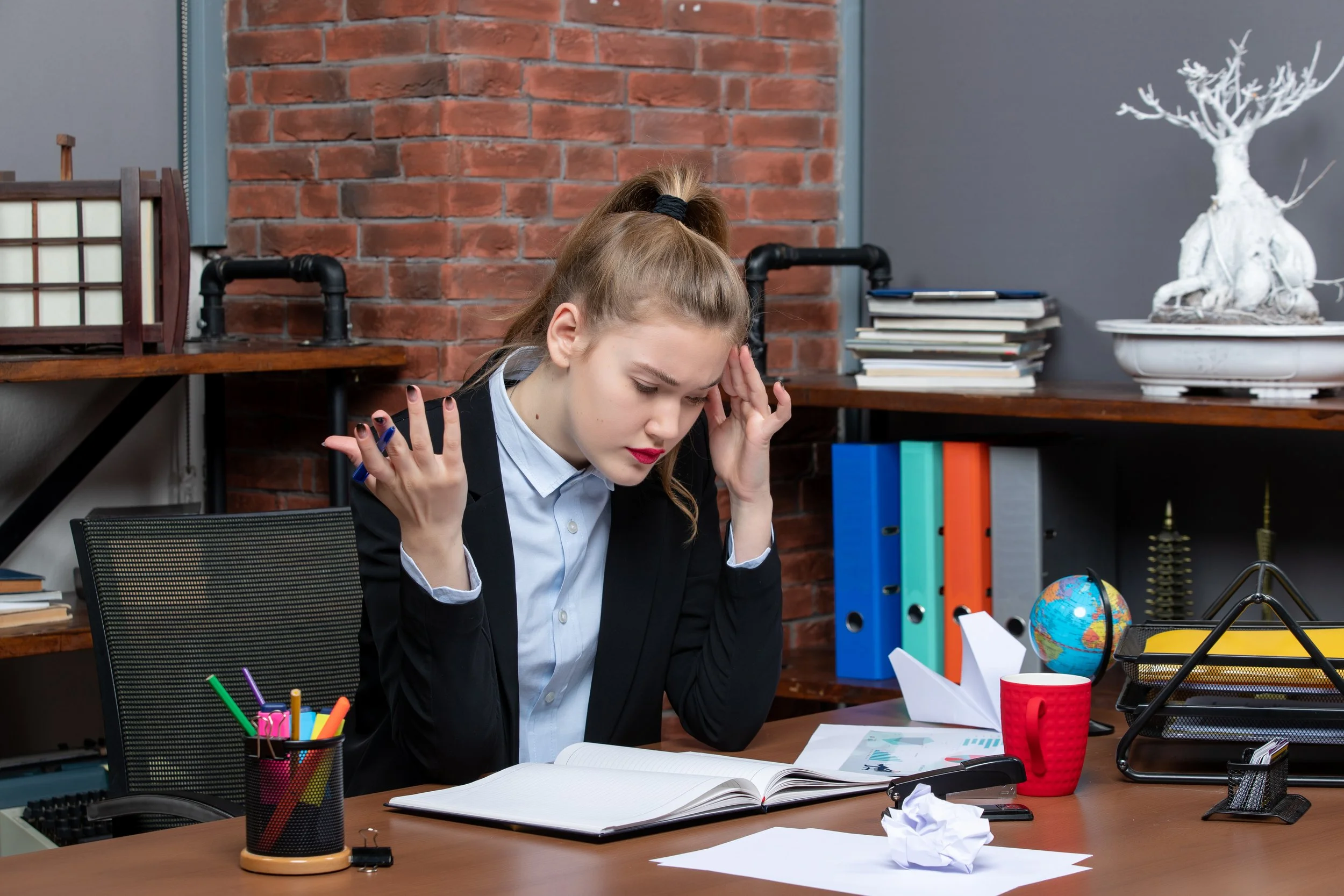
Burnout, anxiety, and depression can sometimes develop when stress remains unresolved for long periods.
What getting help can look like
Getting help does not have to mean a dramatic crisis response.
It can look like:
talking with a therapist
speaking with your doctor
using a talking therapies service
asking one trusted person for support
addressing anxiety, depression, or burnout before it gets worse
NIMH says there are ways to get help if you are struggling emotionally or have concerns about your mental health. NHS Talking Therapies services are available for adults struggling with anxiety and depression. (National Institute of Mental Health)
You do not need a perfect explanation before reaching out. “I am stressed, and it is starting to affect my life” is already enough.

Therapy can help individuals identify when stress is becoming unmanageable and develop healthier coping strategies.
You do not have to wait until you break
This may be the most important part.
You do not need to wait until you fully burn out.
You do not need to wait until work falls apart.
You do not need to wait until people around you can clearly see that you are struggling.
If stress has become constant, physical, emotionally disruptive, or hard to cope with, that already matters. The NHS, NIMH, and SAMHSA all point to getting help when symptoms begin affecting everyday life, not only when there is an emergency. (nhs.uk)
If this article feels personal, that may be a useful sign. Sometimes the moment stress becomes something more serious is the moment you realize you cannot keep carrying it the same way anymore.