

Childhood Trauma in Adults: Signs It May Still Be Affecting You
A lot of adults do not think of themselves as people with trauma.
They may know childhood was hard, chaotic, painful, or lonely, but they do not always connect those early experiences to what is happening in their life now. They may say things like:
“It was a long time ago.”
“Other people had it worse.”
“I should be over it by now.”
“That was just how my family was.”
But childhood trauma does not always stay in childhood.
Sometimes it shows up years later in the way you relate to people, how your body responds to stress, how safe you feel in relationships, how hard you are on yourself, or how quickly you go into survival mode. The past may be over, but your mind and body may still be living by rules they learned early.
If you have ever wondered whether childhood trauma may still be affecting you as an adult, there are some signs worth paying attention to.
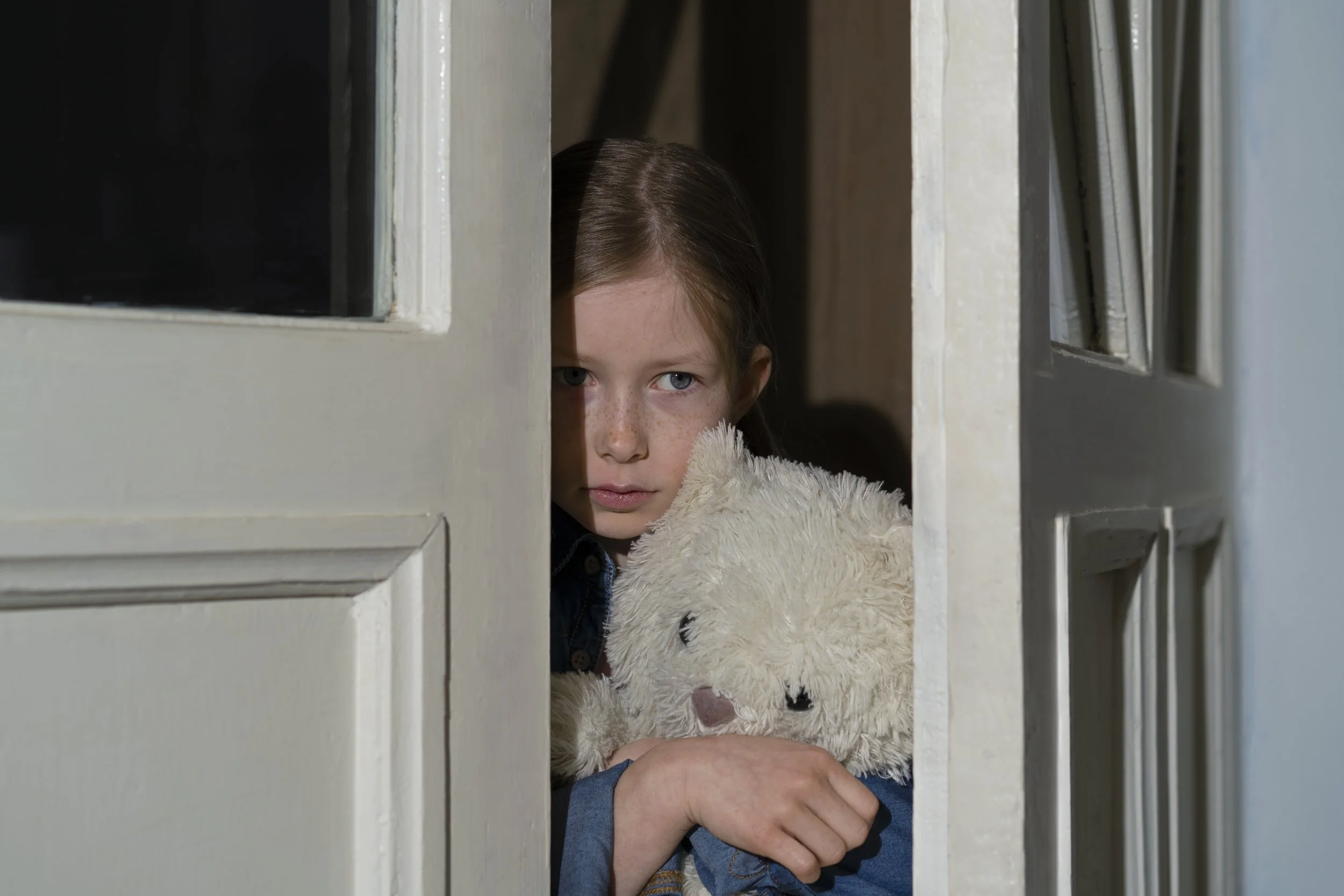
Unresolved childhood trauma can contribute to anxiety, stress, and emotional reactivity later in life.
You feel on edge even when life is mostly okay
One common sign is that your nervous system rarely seems to fully settle.
You may notice:
you startle easily
you are always scanning for problems
you have trouble relaxing
your body feels tense most of the time
calm moments feel temporary instead of safe
This can be confusing because part of you may know nothing bad is happening right now. But if your childhood taught your body that home, relationships, or emotions were unpredictable, your system may still expect danger even when life looks stable on the outside.
A lot of adults with childhood trauma do not think of themselves as traumatized. They think of themselves as intense, anxious, high-strung, or bad at relaxing. But sometimes what feels like your personality is really a nervous system that learned early it had to stay ready.
You have a hard time trusting people
Childhood trauma often affects trust in deep ways.
If the people who were supposed to keep you safe were inconsistent, critical, emotionally unavailable, unpredictable, or harmful, trust may not feel simple now. You may want closeness and still find yourself pulling back from it.
This can look like:
expecting people to disappoint you
assuming others will leave, lie, or turn on you
feeling suspicious when things are going well
having a hard time believing love is steady
keeping emotional walls up even with safe people
You may not even realize how much effort it takes to stay guarded. It may just feel normal to watch people closely, expect the worst, or avoid depending on anyone too much.
If relationships often feel emotionally risky, childhood trauma may be part of the reason.
Conflict feels much bigger than it should
A lot of adults with unresolved childhood trauma do not only dislike conflict. They feel deeply overwhelmed by it.
You may notice that during disagreement you:
shut down
go blank
feel panicky
get defensive very quickly
become unusually angry
feel like you need to escape the conversation
The current disagreement may be small, but your body may react as if something much bigger is happening. That often happens when conflict was unsafe in childhood.
If raised voices, criticism, disappointment, or someone being upset with you once meant danger, rejection, humiliation, or emotional chaos, your nervous system may still respond that way now.
This is one reason adult relationships can feel so hard after childhood trauma. You are not only reacting to the present moment. Sometimes your body is reacting to every earlier moment it has learned to connect with that feeling.

Unresolved childhood trauma can contribute to anxiety, stress, and emotional reactivity later in life.
You are very hard on yourself
Childhood trauma often leaves people with a painful inner voice.
If you grew up with criticism, neglect, emotional unpredictability, shame, or impossible standards, you may have internalized the idea that you are the problem. Even as an adult, that can show up as:
constant self-criticism
feeling like you are never enough
shame over small mistakes
assuming everything is your fault
feeling like you have to earn love or rest
You may look competent from the outside and still carry a harsh inner world that other people never see.
A lot of adults with childhood trauma are incredibly hard workers, very responsible, and deeply self-aware. But underneath that, there is often a fear of failure, rejection, or being exposed as not good enough.
If your inner voice is far more punishing than compassionate, that may not have come out of nowhere.
You struggle with boundaries
Childhood trauma can affect boundaries in both directions.
Some adults become extremely guarded and keep everyone at a distance. Others have the opposite problem and struggle to protect themselves at all.
You may notice:
saying yes when you want to say no
feeling guilty when you disappoint people
overexplaining simple boundaries
letting others take too much from you
feeling responsible for other people’s emotions
cutting people off suddenly after tolerating too much for too long
This often makes sense when you consider early survival patterns.
If your childhood taught you that your needs were inconvenient, unsafe, or ignored, you may have learned to disconnect from them. If keeping other people happy helped you stay emotionally safer, people pleasing may have become a survival skill.
The problem is that survival skills from childhood can become painful patterns in adulthood.
You feel emotionally numb or disconnected
Not everyone with childhood trauma feels obviously emotional.
Some people feel the opposite. They feel flat, detached, or cut off from their own inner life.
This may look like:
going through the motions
struggling to feel joy
feeling far away from your own body
not knowing what you feel until it is overwhelming
feeling disconnected even in good moments
This kind of numbness can be hard to explain. Other people may think you are calm, private, or independent. Inside, you may feel like you are not fully present in your own life.
Sometimes this happens because shutting down was the safest option early on. If feeling too much was overwhelming or dangerous in childhood, your system may have learned to protect you through emotional distance.
That response can stay long after the original environment is gone.

Childhood trauma often affects how adults experience trust, emotional safety, and connection with others.
You either avoid closeness or cling to it
Childhood trauma often shapes attachment.
Depending on your experiences, you may find yourself:
pulling away when people get close
feeling uncomfortable with vulnerability
needing constant reassurance
fearing abandonment intensely
feeling lonely but unsafe in connection
swinging between wanting closeness and pushing people away
This can be especially painful because many adults with childhood trauma deeply want love and stability. But their nervous system may not know how to rest inside it.
You may want healthy connection and still find yourself bracing for rejection, disappointment, or betrayal. That does not mean you are broken. It often means your body learned early that relationships were not always safe places to soften.
If you keep repeating painful relationship patterns you do not fully understand, childhood trauma may be a deeper layer worth exploring.
You overreact, shut down, or feel hijacked under stress
A lot of adults with unresolved trauma feel ashamed of how strongly they react to stress.
You may notice that small things can quickly lead to:
panic
anger
tears
numbness
shutting down
feeling totally overwhelmed
Then afterward, you may think, “Why did that hit me so hard?”
Often the answer is that your stress response is not only about the current moment. It is about what your body learned to do under pressure a long time ago.
Childhood trauma can keep your nervous system more reactive, more sensitive to threat, and slower to return to baseline. So even ordinary stress may feel bigger than it looks.
If you often feel hijacked by emotions and then ashamed of them later, that may be a sign your system is still carrying old survival patterns.
You feel responsible for everyone and everything
This is especially common in adults who had to grow up too fast.
If you were parentified, emotionally responsible for adults, or expected to manage chaos early, you may still carry that role now.
You may notice:
overfunctioning in relationships
feeling responsible for fixing everything
struggling to rest when others are upset
taking on too much
feeling guilty when you are not useful
tying your worth to being dependable
This can look like strength, and in many ways it is. But it can also be exhausting.
A lot of adults with childhood trauma are the people others rely on most. They are capable, perceptive, and hardworking. But underneath that, there is often a deep fear of not being needed, not being enough, or letting everything fall apart if they stop holding it together.
If usefulness has become the main way you feel secure, that may be connected to what you had to become early on.
You minimize your past even though it still affects you
One of the strongest signs childhood trauma may still be affecting you is that part of you already suspects it does, but another part keeps dismissing it.
You may say:
“It was not that bad.”
“Nothing major happened.”
“My parents did their best.”
“I do not have the right to call it trauma.”
Sometimes trauma is obvious. Sometimes it is cumulative.
It can come from chronic criticism, emotional neglect, instability, fear, being parentified, living around addiction, unpredictable rage, or never feeling truly safe, seen, or protected.
You do not need to have the “worst” story for it to count. If your early experiences shaped the way you move through life now, that matters.

Emotional numbness, avoidance, and difficulty expressing feelings can sometimes be connected to childhood trauma.
Therapy can help make sense of what still hurts
If you see yourself in these patterns, therapy can help in very practical and meaningful ways.
It can help you:
understand how childhood experiences still affect adult life
notice survival patterns without shaming yourself for them
regulate your nervous system more effectively
improve boundaries and relationships
soften harsh self-talk
process grief, anger, or pain connected to the past
build a stronger sense of emotional safety in the present
The goal is not to blame everything on childhood forever. It is to understand what shaped you so you can stop living on autopilot inside patterns that no longer serve you.
If part of you has been quietly wondering whether the past is still affecting you, that question is worth listening to.
You do not have to keep carrying it just because it happened long ago
This may be the most important part.
You do not need to prove that your childhood was bad enough.
You do not need to wait until your life is falling apart.
You do not need to minimize what still hurts just because time has passed.
If your body, relationships, self-worth, or sense of safety are still shaped by what you lived through early on, that matters now.
And if this article feels personal, that may be a meaningful sign that support could help you move from survival into something steadier, kinder, and more free.

Therapy can help adults understand how childhood trauma continues to affect their thoughts, emotions, and behaviors.