

Why Anxiety Can Make It Hard to Relax Even When Life Looks Fine
A lot of people feel confused by this.
From the outside, life may look fairly okay. Work is moving. Relationships are mostly intact. There is food in the fridge, a roof overhead, maybe even moments that should feel calm or enjoyable. And yet your body will not settle. Your mind keeps scanning. Rest feels unnatural. Quiet feels tense instead of comforting.
This is one of the more frustrating parts of anxiety.
People often assume anxiety only makes sense when something is clearly wrong. But anxiety does not always wait for a visible crisis. Sometimes it stays active even when life looks stable on paper. That can leave you wondering why you cannot just relax and enjoy what is right in front of you.
If that sounds familiar, you are not alone. Anxiety can make it genuinely hard to relax, even when your life looks fine from the outside.

This image represents high-functioning anxiety where someone may look fine externally while feeling constantly stressed internally.
Anxiety is not only about what is happening around you
One reason this feels so confusing is that people often think emotions should match visible circumstances.
They think:
“If nothing is wrong, I should feel calm.”
“If life is okay, why am I still on edge?”
“If I am safe, why does my body not believe it?”
But anxiety does not only respond to what is happening around you right now. It also responds to what your nervous system has learned to expect.
If your body has spent a long time dealing with:
chronic stress
unpredictable situations
high pressure
emotional instability
trauma
people pleasing
constant responsibility
then “fine” may not feel the same as safe.
Your mind may know things are okay enough. Your body may still be waiting for the next problem.
That gap between external stability and internal tension is often where anxiety lives.
Your nervous system may still be scanning for the next thing
A lot of anxiety is anticipatory.
It does not only react to what is here. It tries to prepare for what might happen next.
That can sound like:
“What am I forgetting?”
“What if something goes wrong later?”
“I should stay alert just in case.”
“I cannot fully relax yet.”
“Something always comes up.”
When this pattern is strong, calm moments do not feel restful. They feel temporary. Instead of enjoying peace, you brace for interruption. Instead of settling in, you stay slightly guarded.
This is one reason anxiety can be so exhausting. Even good days may not feel good for very long because part of your mind is already leaning into the next possible problem.
If this sounds familiar, therapy can help you understand why your system keeps scanning and what it may take to begin teaching it that the present moment does not always require protection.
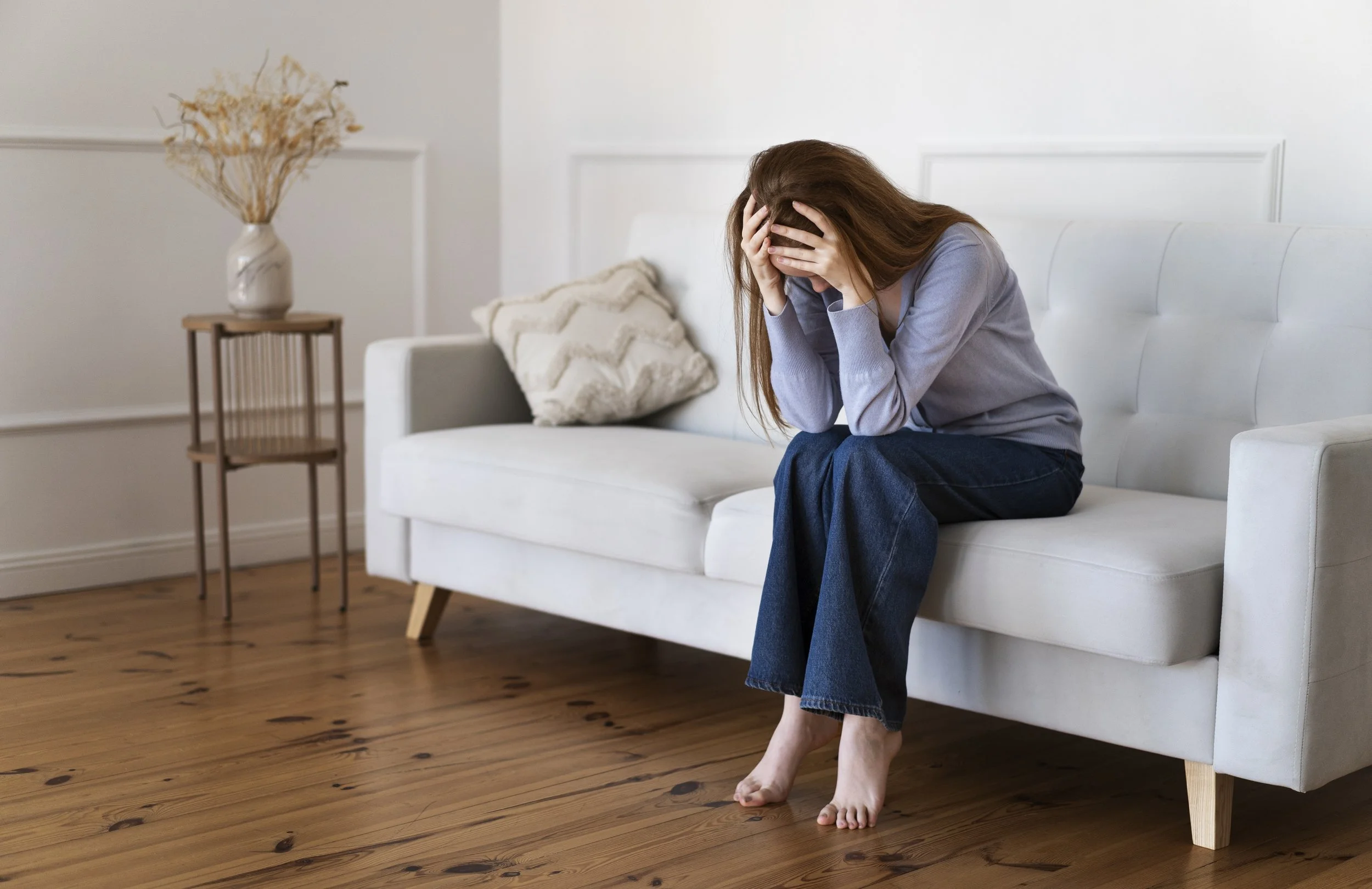
Anxiety can keep the mind active and make it difficult to fully rest or feel calm.
Anxiety can make stillness feel uncomfortable
People often assume relaxing should come naturally when they finally have time.
But for many anxious people, stillness is exactly when the mind gets louder.
You may notice that when you try to rest:
your thoughts speed up
you suddenly remember everything you need to do
your body feels restless
you feel guilty for not being productive
your chest feels tight even on the couch
you reach for your phone without even thinking
This does not mean you are bad at resting. It often means your system has gotten used to motion, stimulation, or problem solving as a way to stay regulated.
When life slows down, the anxiety that was masked by busyness gets more noticeable.
That is why some people keep themselves busy all the time and then wonder why they crash emotionally the second there is nothing urgent to do.
The issue is not always that you need more rest. Sometimes it is that anxiety has made rest feel unsafe, unfamiliar, or emotionally exposed.
High functioning anxiety often hides in productivity
A lot of anxious people are very capable.
They are organized, responsible, and good at keeping life moving. On the surface, this can look like they are doing well. Underneath, anxiety may be driving much of that functioning.
You may notice that:
staying busy helps you feel in control
productivity keeps your mind from spiraling
finishing tasks gives brief relief
unstructured time makes you edgy
your worth feels tied to staying useful
In this kind of anxiety, relaxing is not hard because you are lazy. It is hard because doing has become your way of staying emotionally regulated.
If that pattern has been around for a long time, slowing down can feel like losing control. The nervous system may interpret rest not as recovery, but as vulnerability.
This is one reason someone can look very successful and still feel deeply anxious inside. Therapy can help with this by gently separating productivity from safety and helping you build a steadier internal sense of calm.
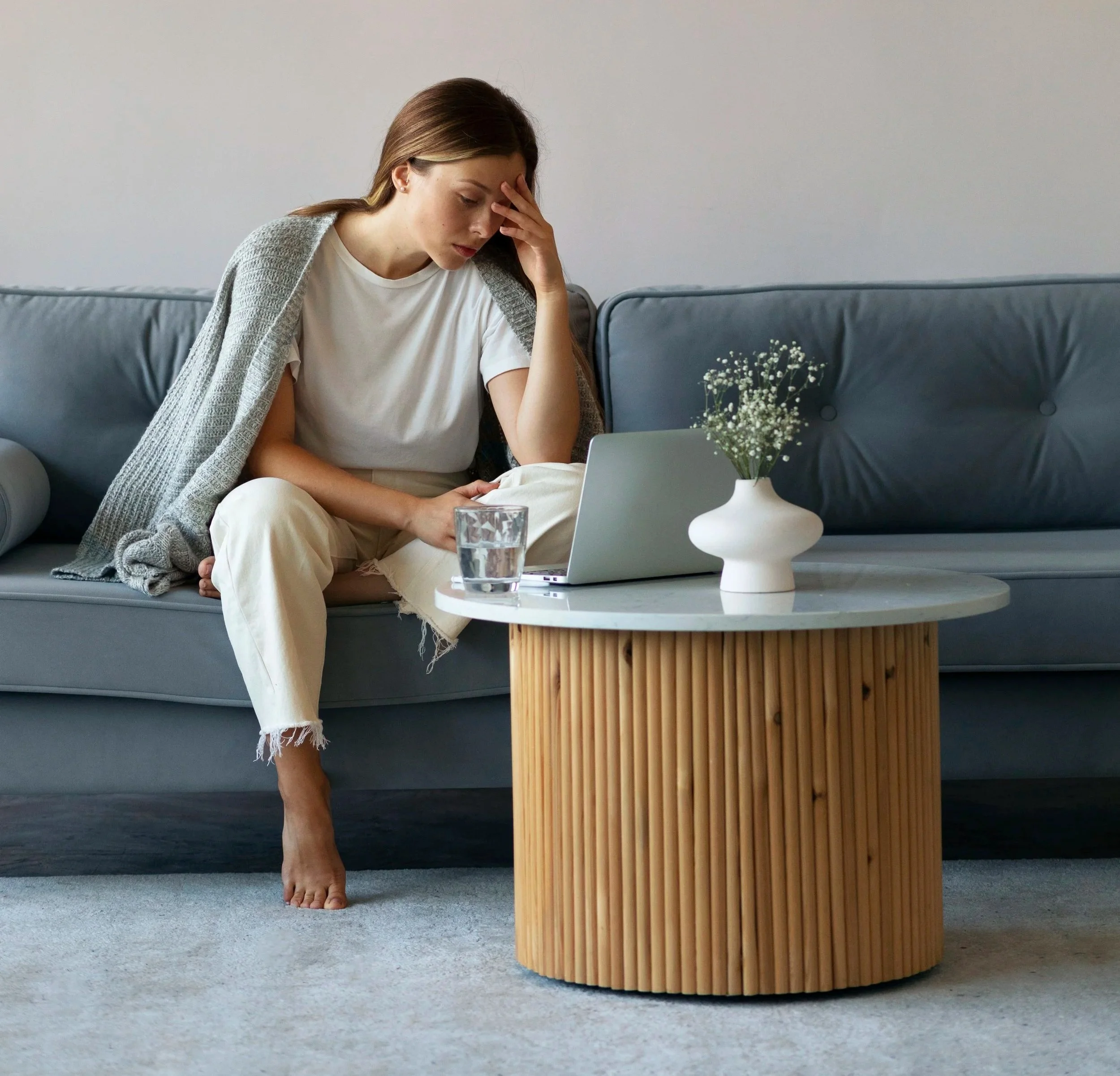
Even when life looks fine externally, anxiety can create constant worry and emotional exhaustion.
Your body may be carrying anxiety even when your mind says “I’m fine”
Sometimes people say, “I do not think I am anxious,” while their body tells a different story.
That may look like:
jaw clenching
shallow breathing
stomach issues
headaches
tight shoulders
poor sleep
feeling tired and wired at the same time
This is important because anxiety is not only a thought problem. It is a body state too.
You may be so used to tension that you no longer register it clearly. You may think of yourself as just tired, just intense, just a bad sleeper, or just someone who cannot unwind. But sometimes those are all signs that your nervous system is staying activated even when there is no current emergency.
If you rarely feel fully settled in your body, that is worth noticing. Calm is not only mental. It is physical too.
Relaxing can bring up feelings you have been outrunning
Another reason anxiety can make relaxation hard is that when things get quiet, other feelings often rise up too.
You may suddenly become aware of:
sadness
loneliness
grief
resentment
disappointment
fear about the future
feelings you have been pushing past for a long time
If your life has been busy or demanding, anxiety may have become a kind of cover. It keeps you planning, doing, anticipating, and managing. The moment you stop, you may feel what has been waiting underneath all that activity.
That can make rest feel emotionally risky.
Instead of feeling like relief, it may feel like exposure.
This is one reason therapy can be helpful even when life looks fine. Sometimes the real issue is not that nothing is wrong. It is that there has not been enough space to feel what is actually there.

Chronic anxiety can keep the nervous system activated, making relaxation feel uncomfortable or unfamiliar.
Sometimes “life looks fine” only means the outside looks organized
This part matters too.
A lot of people tell themselves life is fine because the visible pieces are intact. But external stability does not always mean internal ease.
You may have:
a job, but feel constantly anxious at work
a relationship, but feel emotionally disconnected
a home, but never feel at peace inside it
supportive people around you, but still feel alone in your own head
no visible crisis, but a constant sense of pressure
It is possible to have a life that looks okay from the outside and still be carrying more than your system can comfortably hold.
This is especially true for people who are used to minimizing their own pain because they think they should be grateful. Gratitude and anxiety can exist at the same time. Stability and distress can exist at the same time too.
If you keep telling yourself life looks fine while your body and mind keep saying otherwise, it may be time to listen more closely to what “fine” is costing you.
Anxiety often makes peace feel unfamiliar
One of the hardest truths about long term anxiety is that some people stop trusting peace.
When things are calm, they feel suspicious. When nothing is wrong, they wait for something to go wrong. When a day is easy, they assume the other shoe will drop.
This can create a painful pattern where:
chaos feels familiar
calm feels strange
rest feels uncomfortable
ease feels temporary
peace feels hard to believe
If this is your pattern, it does not mean you like stress. It usually means your system got used to living in a certain level of activation. What is familiar starts to feel normal, even when it is exhausting.
Therapy can help you work with this gently. The goal is not to force you to relax on command. It is to help your body and mind become more able to recognize calm as something real and safe enough to receive.

Therapy can help individuals understand anxiety patterns and learn how to calm the mind and body.
What therapy can help with
If anxiety makes it hard to relax even when life looks fine, therapy can help in very practical ways.
It can help you:
understand what is keeping your nervous system activated
notice the thoughts that keep you bracing
work on body based calming skills
untangle anxiety from productivity and control
process stress, trauma, or emotional overload underneath the pattern
build a more trustworthy relationship with rest
Therapy does not only help when there is a dramatic crisis. It can also help when you are tired of feeling on edge for reasons you cannot fully explain.
If part of you is longing to actually feel the calm your life appears to have, that is a meaningful reason to reach out.
You do not have to earn rest by burning out first
A lot of anxious people wait until they are exhausted enough to “deserve” slowing down.
But you do not have to hit burnout before your difficulty relaxing counts. You do not have to prove that your life is bad enough before you take your nervous system seriously.
If life looks fine and you still cannot settle, that does not make you ungrateful or broken. It may simply mean your anxiety is asking for care, even if the outside of your life looks stable.